
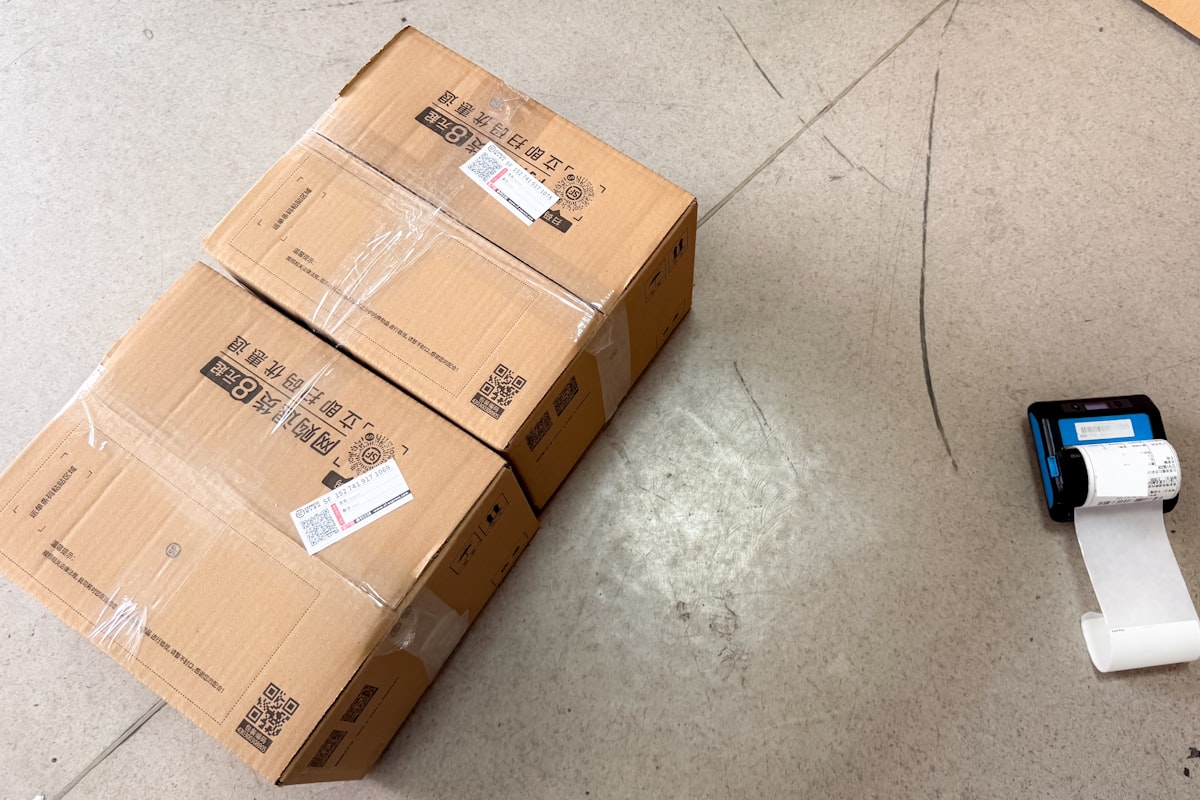
You can identify a direct thermal label with your thumbnail: scratch it quickly and friction heat leaves a dark mark. Thermal transfer labels won't mark, because the image comes from the ribbon, not the material.
Every warehouse, shipping station, and production line prints labels on thermal printers — and every one of them has to choose between two technologies that look identical on the shelf but behave very differently over time.
Direct thermal: simple, ribbon-free, short-lived
Direct thermal stock has a heat-sensitive coating; the printhead darkens it directly. No ribbon means simpler operation, one less consumable, and slightly cheaper printing. The tradeoff: the image fades with time, heat, and sunlight. That's fine for a shipping label whose job ends in a week — it's the standard for parcel labels — but wrong for anything that must scan months later.
Thermal transfer: the durable option
Thermal transfer printing melts ink from a ribbon onto the label, producing a crisp, stable image that survives years, sunlight, and handling. It's the choice for pallet labels in long-term storage, rack and bin locations, asset tags, and compliance labeling.
The catch is that the ribbon must match the material: wax ribbons for paper, wax-resin for coated stocks, resin for films. A mismatched pair produces print that smears, flakes, or scans poorly — the most common root cause of 'bad label' complaints that are really consumable-pairing problems. Buying labels and ribbons from the same supplier, matched as a set, eliminates the guesswork.
Quick decision table
- Parcel shipping labels → direct thermal
- Pallet / LPN labels stored for months → thermal transfer, wax-resin
- Rack and location labels → thermal transfer, laminated if forklift traffic is close
- Asset tags and compliance marks → thermal transfer on film, resin ribbon
- Receipts, short-lived tickets → direct thermal
Frequently asked questions
How long does a direct thermal label stay readable?
Direct thermal images fade with time, heat and sunlight, so the stock suits labels whose job ends within days or weeks, like parcel shipping labels. Anything that must scan months later should be printed by thermal transfer.
Which ribbon should I use with thermal transfer labels?
Match the ribbon to the material: wax ribbons for paper, wax-resin for coated stocks, and resin for films. A mismatched pair produces print that smears, flakes or scans poorly.
How can I tell whether a label is direct thermal or thermal transfer?
Scratch it quickly with a thumbnail. Friction heat leaves a dark mark on direct thermal stock, while a thermal transfer label will not mark because its image comes from the ribbon, not the material.
Put this into practice
Configure your exact spec — size, material, colors, quantity — and see a budget estimate in about 2 minutes. A specialist confirms final pricing within one business day.